

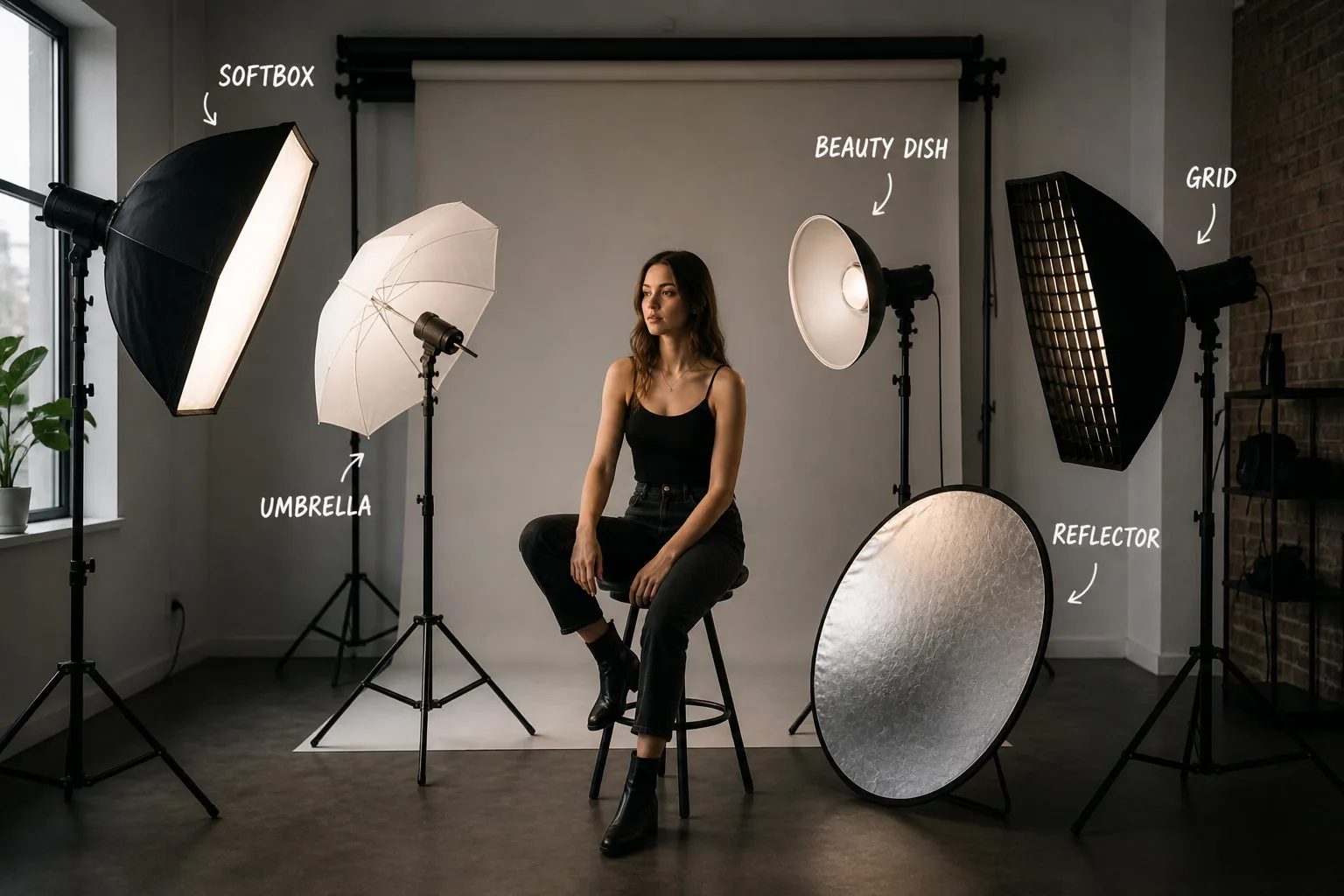
Lighting is one of the most important parts of photography. Even with a great camera and lens, poor lighting can make an image feel flat or unprofessional.
Many photographers focus on buying lights first, but the modifier attached to the light often matters just as much.
A light modifier changes how light behaves. It affects softness, direction, contrast, shadow quality, and the overall mood of the image.
Understanding modifiers helps photographers create intentional results instead of guessing during a shoot.
What Is a Light Modifier?
A light modifier is any tool placed in front of or around a light source to control how the light spreads.
Different modifiers create different effects.
Some produce soft and flattering light. Others create dramatic shadows or directional highlights.
The modifier you choose should depend on:
- The subject
- The mood
- The shooting environment
- The style of photography
There is no perfect modifier for every situation.
The goal is to understand what each tool does.
Softboxes: Controlled and Soft Lighting
Softboxes are one of the most common modifiers used in studio photography.
They create soft, even lighting while keeping control over the direction of light.
Softboxes are popular because they produce flattering skin tones and smooth shadows.
They work well for:
- Portrait photography
- Fashion photography
- Beauty photography
- Product photography
Larger softboxes usually create softer light because the light source appears larger relative to the subject.
Common shapes include:
- Rectangular
- Square
- Octagonal
- Strip softboxes
Each shape creates slightly different catchlights and shadow patterns.
Umbrellas: Fast and Flexible
Umbrellas are often used by beginner photographers because they are affordable and quick to set up.
They spread light over a wider area.
There are two common types:
Shoot-Through Umbrellas
These umbrellas allow light to pass through the fabric.
They create soft light that spreads widely.
They work well in small studios or for simple portrait setups.
Reflective Umbrellas
Reflective umbrellas bounce light back toward the subject.
They usually create slightly more contrast than shoot-through versions.
Umbrellas are useful for:
- Fast setups
- Events
- Portrait photography
- Budget studio work
The downside is less control compared to softboxes.
Beauty Dishes: Strong Yet Flattering
Beauty dishes create a unique combination of softness and contrast.
They are popular in fashion and beauty photography.
The light feels more focused than a softbox but softer than direct flash.
Beauty dishes create strong facial definition while still keeping skin attractive.
They are often used for:
- Headshots
- Beauty portraits
- Editorial photography
- Glamour photography
Many photographers combine beauty dishes with grids for extra control.
Reflectors: Simple but Powerful
Reflectors do not create light. They redirect existing light.
This makes them one of the most useful tools in photography.
Reflectors can soften shadows, brighten the face, or create catchlights in the eyes.
Common reflector colors include:
- White for soft fill
- Silver for stronger reflection
- Gold for warm tones
- Black for negative fill
- Translucent for diffusion
Reflectors are especially useful outdoors where natural light changes quickly.
Grids: Direction and Control
Grids help narrow the spread of light.
They prevent light from spilling into unwanted areas.
This creates more contrast and a cinematic feel.
Grids are often attached to:
- Softboxes
- Beauty dishes
- Reflectors
Photographers use grids when they want to control background spill or highlight specific areas.
They work well for dramatic portraits and low-key lighting.
Size Matters More Than Many People Think
One of the biggest lighting principles is simple:
The larger the light source relative to the subject, the softer the light appears.
A small modifier close to the subject may still look soft.
A large modifier far away may become harder.
Distance matters just as much as modifier type.
Learning how size and distance interact gives photographers much more control.
Choosing the Right Modifier for Your Style
Instead of buying every modifier immediately, start with one or two versatile options.
For many photographers, a strong beginner setup includes:
- One large softbox
- One reflector
- One umbrella
This combination covers many situations.
As your style develops, you can add specialized tools.
Ask yourself:
- Do I prefer soft portraits?
- Do I like dramatic shadows?
- Do I shoot fashion or lifestyle?
- Do I work mostly indoors or outdoors?
Your answers help guide equipment choices.
Final Thoughts
Light modifiers are not just accessories.
They shape how your images feel.
Learning modifiers takes practice, but understanding them helps photographers create more consistent results.
You do not need expensive gear to create beautiful lighting.
The key is understanding how light behaves — and choosing the right tool to control it.
💬 Comments · 0 comments
Be the first to comment.