

Model-Sharing explained: how it works and who benefits
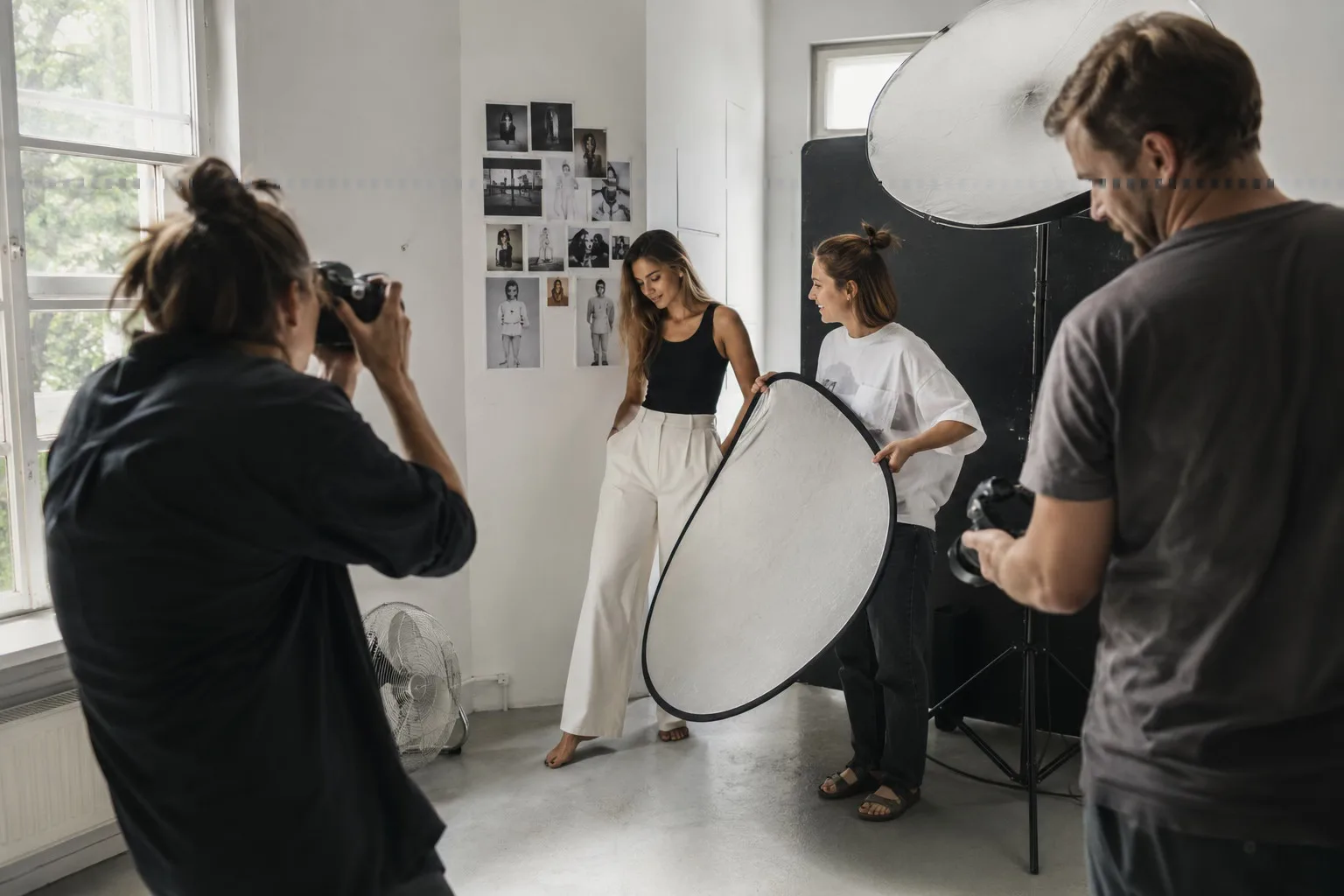
Last week I stood in a bright loft in Berlin, surrounded by three other photographers, two stylists, and a model we all shared. An hour earlier, I had hesitated whether to come to this model-sharing – too often you experience hectic sets where no one really knows who goes when. But this time it was different: everyone had their slot, the model was relaxed, and in the end I had four strong looks in the can, for a fraction of the usual cost.
Model-sharing is not a new concept, but in times of rising production costs and the desire for more efficient networking, it is experiencing a renaissance. Instead of booking a model exclusively for a whole day, several creatives share the time and costs. That sounds pragmatic at first, but the real gain lies in the dynamics that arise when different perspectives meet the same face.
How does model-sharing work in concrete terms?
Organization usually runs via platforms like FindAShoot or directly via WhatsApp groups. A photographer or MUA initiates a project: "I'm looking for two more photographers for a model-sharing on March 15 in Cologne. Model is Lisa, TFP basis, everyone gets 45 minutes." The costs for location, styling, and possibly the model are shared – often 50/50 or in thirds. Sometimes one brings the location, another the equipment, a third the model. It's important to define clear rules beforehand: Who shoots when? Which looks are allowed? Who gets the raw files?
I've learned that the devil is in the details. Once I shared a model with a fashion photographer who wanted every outfit restyled three times – my time window shrank to 20 minutes. Since then, I insist on a written schedule. Sounds bureaucratic, but it saves frustration.
Who benefits the most?
Photographers not only save money but also expand their portfolio with new perspectives. If you usually do portraits, sharing with a beauty shooter can inspire you to try different lighting setups. Models, in turn, get into multiple portfolios in one day and make contacts with various creatives – that's more efficient than five individual castings. MUAs and stylists can showcase their work under real conditions and are often booked for follow-up projects.
I find the mix of experienced and up-and-coming talents particularly exciting. An established photographer often brings a relaxed atmosphere that benefits everyone. The newcomer on set is more likely to ask about a specific lighting angle if she sees that others are experimenting too.
The downsides: when sharing goes wrong
Model-sharing is not a panacea. It requires communication and a certain amount of social competence. If someone is dominant and takes over the set, it kills creativity. I've experienced shoots where one photographer kept walking into the other's frame or overloaded the model with instructions. Then quality suffers, and everyone goes home frustrated.
The model itself can also be overwhelmed if it has to adjust to completely different moods within minutes. A quiet portrait shooter right after a loud fashion set – that's mentally exhausting. Therefore: plan buffer times and give the model clear breaks.
Practical tips for your first model-sharing
- Start small: Two photographers are enough. Three is already demanding, four only with a lot of experience.
- Define the looks in advance: Everyone brings two to three outfits or concepts they want to implement in their time.
- Respect the times: Set a timer. When your 30 minutes are up, you're out – no discussion.
- Share the results fairly: Everyone gets the images they took themselves. But a joint moodboard exchange afterwards can bring new ideas.
Through model-sharing, I not only diversified my portfolio but also made real friendships. A photographer with whom I shared a model in Hamburg is now my preferred partner for larger productions. Sometimes a pragmatic cost-sharing turns into a creative synergy you would never have found alone.
Next time you see a model that fits your style perfectly, but the budget for an exclusive booking is too high – just ask in your network if anyone wants to join. The worst that can happen is a no. The best: a shoot that opens new doors for you.
💬 Comments · 0 comments
Be the first to comment.