

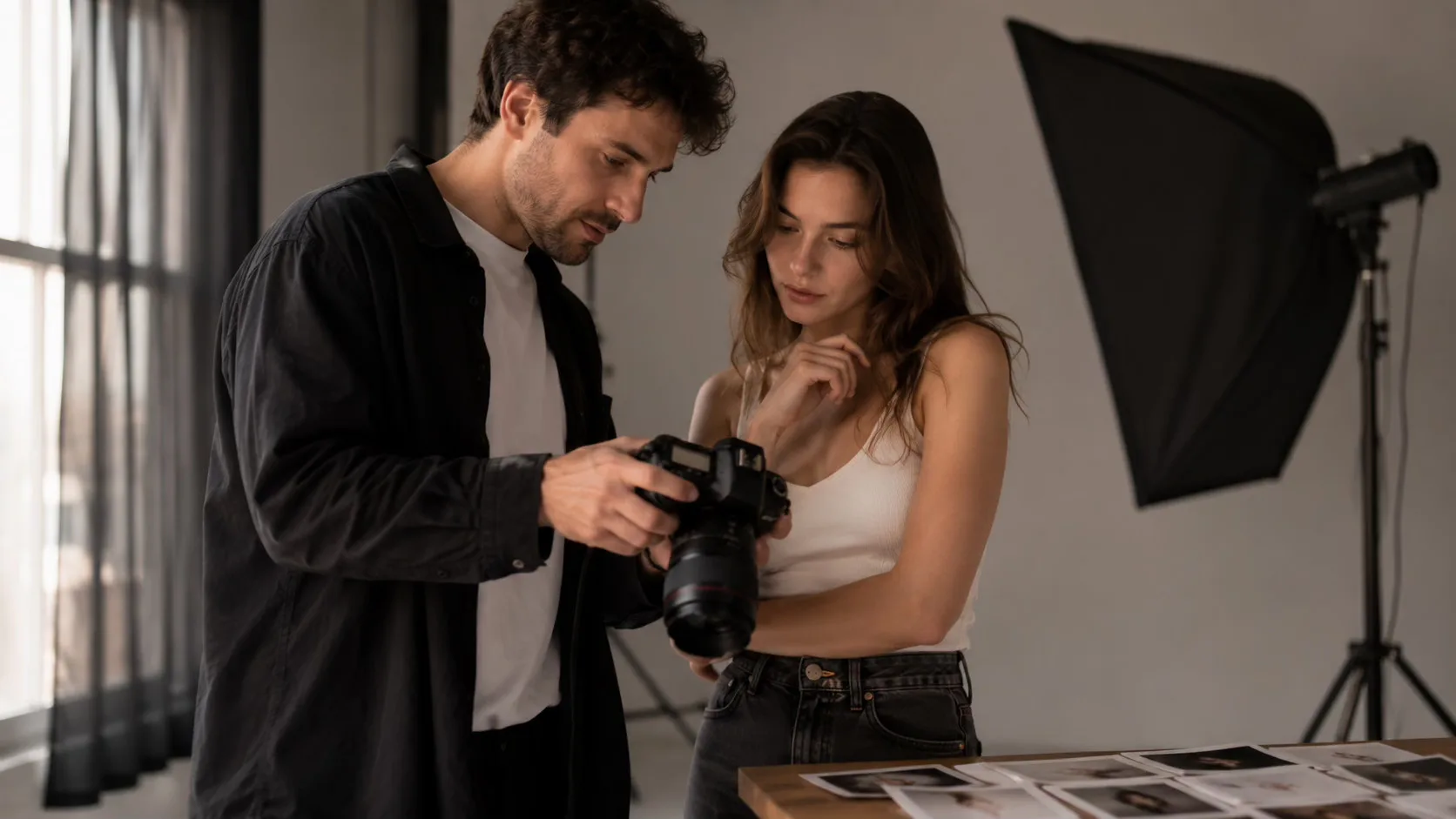
If you are new to photography or modeling, sooner or later you will hear the term TFP shooting.
At first, it sounds simple.
A photographer takes photos.
A model poses.
Nobody pays anyone.
Both receive images for their portfolio.
And yes, that is basically the idea.
But a good TFP shooting is not just a “free photoshoot.”
It is a creative exchange. Both sides invest time, energy, preparation, trust, and sometimes even money for travel, styling, makeup, or studio costs.
That is why TFP should never be confused with “working for nothing.”
When it works well, TFP can help photographers, models, makeup artists, stylists, and other creatives build stronger portfolios and meet the right people. When it is unclear or poorly planned, it can easily lead to disappointment.
The Short Answer
TFP stands for Time for Pictures or Time for Prints.
It means that instead of money, both sides exchange time and creative work for images.
The photographer receives new photos for their portfolio.
The model receives new photos for their portfolio.
And ideally, both sides benefit from the collaboration.
The important word here is benefit.
A TFP shooting only makes sense when both sides get something useful from it.
What Does TFP Mean Today?
Originally, “Time for Prints” referred to printed photos.
A model would give their time, the photographer would take the pictures, and the model would receive printed images.
Today, most TFP shootings are digital.
So in practice, TFP usually means:
- no direct payment
- both sides work on portfolio basis
- the photographer creates and edits selected images
- the model receives agreed images for personal portfolio use
- both sides may use the images depending on the agreement
This can be a great way to build experience, especially at the beginning.
But the details matter.
How many images will be delivered?
When will they be delivered?
Can both sides post them on social media?
Is commercial use allowed?
Can the model edit the photos?
Does the photographer need to be credited?
These questions should be answered before the shoot.
Not after.
TFP Is Not “Free Work”
This is one of the biggest misunderstandings.
TFP does not mean that one person works for free while the other gets all the value.
It means both sides exchange value.
A beginner photographer may want to practice lighting, posing direction, and portrait workflow. A beginner model may want experience, confidence, and portfolio images.
That can be a fair exchange.
But it is not always equal automatically.
For example, if an experienced photographer with a strong portfolio works with a completely new model, the photographer may be giving more value. If an experienced model works with a beginner photographer, the model may be giving more value.
Neither situation is wrong.
But it should be understood.
A fair TFP collaboration is not about everyone having the same level.
It is about both people knowing why they are doing the shoot.
Who Is TFP Useful For?
TFP can be useful for many creative roles, not only photographers and models.
It can help:
- photographers test new lighting setups
- models build or refresh their portfolio
- makeup artists document beauty looks
- stylists show outfits or concepts
- retouchers build before-and-after examples
- videographers create behind-the-scenes content
- creative teams test ideas before commercial work
This is why TFP can be powerful.
It can turn one simple shoot into portfolio material for several people.
But only if the concept is clear and everyone understands what they are getting from it.
When TFP Makes Sense
TFP makes sense when there is a clear creative reason.
For example:
- both sides want to build portfolio images
- the concept is interesting for everyone involved
- the team wants to test a new idea
- the photographer wants to practice a specific lighting style
- the model wants images in a specific mood or aesthetic
- the makeup artist or stylist needs fresh material
- everyone involved can use the result professionally
Good TFP usually has direction.
It does not need to be complicated.
But it should not feel completely random.
A simple moodboard, a clear location, a basic styling idea, and a shared understanding of the final goal can already make a huge difference.
When TFP Does Not Make Sense
TFP does not make sense when only one side benefits.
For example:
- someone wants free work for a commercial project
- there is no clear concept
- expectations are vague
- one person is much more invested than the other
- someone expects professional results without preparation
- the images will not improve anyone’s portfolio
- communication already feels difficult before the shoot
A bad TFP shooting often starts with sentences like:
“Let’s just shoot something.”
Sometimes that can work.
But often it leads to weak results because nobody knows what the shoot is supposed to become.
A strong TFP shooting does not need a huge production.
But it does need intention.
What Should Be Agreed Before a TFP Shooting?
A TFP shooting can stay simple, but a few things should be clear before the day of the shoot.
At minimum, both sides should discuss:
- the concept or mood
- date, time, and location
- styling or outfit direction
- whether makeup or styling is involved
- how many edited images will be delivered
- approximate delivery time
- where the images can be used
- whether commercial use is allowed
- whether credit/tagging is expected
- whether edits or filters are allowed
This may sound formal, but it prevents most misunderstandings.
The goal is not to make the collaboration feel cold.
The goal is to make it calm.
When everyone knows what to expect, the shoot itself becomes easier.
Usage Rights Matter
Even in TFP, usage rights matter.
The photographer usually owns the copyright to the images because they created them.
The model, however, has rights connected to their own image and identity.
This means both sides should understand what they are allowed to do with the photos.
A simple agreement can already help.
For example:
The images may be used by both parties for portfolio, website, and social media self-promotion. Commercial use by third parties requires separate written permission.
This kind of sentence is not complicated.
But it creates clarity.
And clarity prevents problems later.
The Most Common TFP Mistakes
Most TFP problems do not happen because people are bad or unprofessional.
They happen because expectations were never discussed.
Common mistakes include:
- no moodboard
- unclear image delivery
- no agreement about editing
- no discussion about usage rights
- vague communication
- last-minute cancellations
- no styling direction
- no clear purpose for the shoot
- assuming the other person understands everything
Assumptions are dangerous in creative work.
What feels obvious to a photographer may not be obvious to a model.
What feels normal to a model may not be normal to a photographer.
Talking early avoids tension later.
Why Communication Is the Real Difference
A good TFP shooting often feels professional long before the first photo is taken.
The messages are clear.
The concept makes sense.
The time and place are confirmed.
The moodboard is understood.
Everyone knows their role.
That does not mean the shoot has to feel stiff.
It just means nobody is guessing.
Good communication creates trust.
And trust changes the photos.
A model who feels safe and prepared will move differently.
A photographer who knows the concept will direct more clearly.
A makeup artist or stylist who understands the mood will make better choices.
The final images are shaped by all of that.
Is TFP Good for Beginners?
Yes, TFP can be very good for beginners.
For photographers, it is a way to practice working with real people, not just objects, landscapes, or test shots.
It helps photographers learn:
- how to direct posing
- how to control light
- how to create atmosphere
- how to communicate clearly
- how to deliver usable images
For models, TFP helps build confidence and experience.
It helps models learn:
- how to move in front of the camera
- how to understand direction
- how to recognize good angles
- how to prepare outfits
- how to build a stronger portfolio
But beginners should still be selective.
Not every free opportunity is useful.
A TFP shooting should help you grow.
If it does not improve your portfolio, teach you something, or connect you with the right people, it may not be worth your time.
The Difference Between Random TFP and Good TFP
Random TFP is usually built around availability.
Someone is free.
Someone has a camera.
Someone wants pictures.
Good TFP is built around intention.
There is a reason for the shoot.
Maybe the goal is a clean portrait series.
Maybe it is a beauty look.
Maybe it is a fashion moodboard.
Maybe it is a new lighting test.
Maybe it is a collaboration between photographer, model, MUA, and stylist.
The difference is visible in the final result.
Random TFP often creates random images.
Intentional TFP creates portfolio images.
How FindAShoot Can Help
Many TFP shootings still start through Instagram DMs.
That can work.
But it can also be chaotic.
Messages get lost.
Profiles are unclear.
People do not always show their location, availability, or collaboration interests.
It is hard to know who is serious.
And finding the right creative team can take much longer than expected.
FindAShoot was built around this problem.
It helps creatives become visible by role, location, portfolio, and creative direction.
That matters because a good TFP shooting is not just about finding “someone available.”
It is about finding the right person for the right idea.
A photographer may need a model for a soft natural-light portrait.
A model may need a photographer for clean portfolio images.
A makeup artist may want to collaborate on a beauty editorial.
A stylist may want to build a fashion story.
When the right people can find each other more easily, TFP becomes less random and more valuable.
If you are a photographer, model, makeup artist, stylist, retoucher, or videographer, creating a profile on FindAShoot can help others understand who you are, what you create, and what kind of collaborations you are open to.
That is often the first step toward better shoots.
Final Thoughts
A TFP shooting can be one of the best ways to enter the creative world.
It can help people build portfolios, gain experience, test ideas, and create connections.
But only when it is treated with respect.
TFP does not mean free.
It means exchange.
Time for images.
Experience for portfolio.
Creativity for visibility.
Trust for collaboration.
And when expectations are clear, communication is respectful, and everyone understands the value they bring, a simple TFP shooting can become much more than “just a free shoot.”
It can become the beginning of a creative network.
💬 Comments · 0 comments
Be the first to comment.