

Most beginner photographers don’t start with a lack of creativity.
They start with too much information.
One video says you need three lights.
Another says you need expensive lenses.
Someone else is reviewing a camera body that costs more than an entire beginner setup.
And after a few weeks online, many people end up believing photography is mostly about buying gear.
Then reality arrives.
Because the first time you actually control light properly, you realize something important very quickly:
A simple setup can already look surprisingly professional.
Most Beginners Buy Too Much Too Early
This happens constantly.
A photographer buys:
- RGB lights they barely use
- cheap modifiers that create bad light
- too many accessories
- complicated setups they don’t fully understand yet
Not because they are making irrational decisions.
But because online photography culture often makes complexity look more “professional.”
In reality, most strong beginner studio images come from:
- one good light
- one good modifier
- good positioning
- and understanding how light behaves
Not from owning ten different gadgets.
Light Changes More Than Camera Bodies
This is usually the hardest lesson for beginners to believe.
A strong lighting setup often changes an image more than upgrading from one camera body to another.
Good light affects:
- skin texture
- depth
- mood
- shadows
- separation
- atmosphere
And once photographers start controlling light intentionally, photography stops feeling accidental.
It starts feeling designed.
This is why so many experienced photographers recommend investing in lighting before obsessing over camera upgrades.
One Light Is Enough to Learn Properly
Many photographers remember the moment they first understood this.
One light.
One softbox.
One subject.
And suddenly, everything starts making more sense.
Because limitations force observation.
You start noticing:
- distance from the subject
- softness
- shadow transitions
- catchlights
- background separation
This is also where many photographers first encounter the difference between hard light and soft light.
Source:
https://en.wikipedia.org/wiki/Hard_and_soft_light
The quality of light changes the emotional feeling of an image more than most people expect.
A Beginner Setup Does Not Need to Be Expensive
This is another thing social media often distorts.
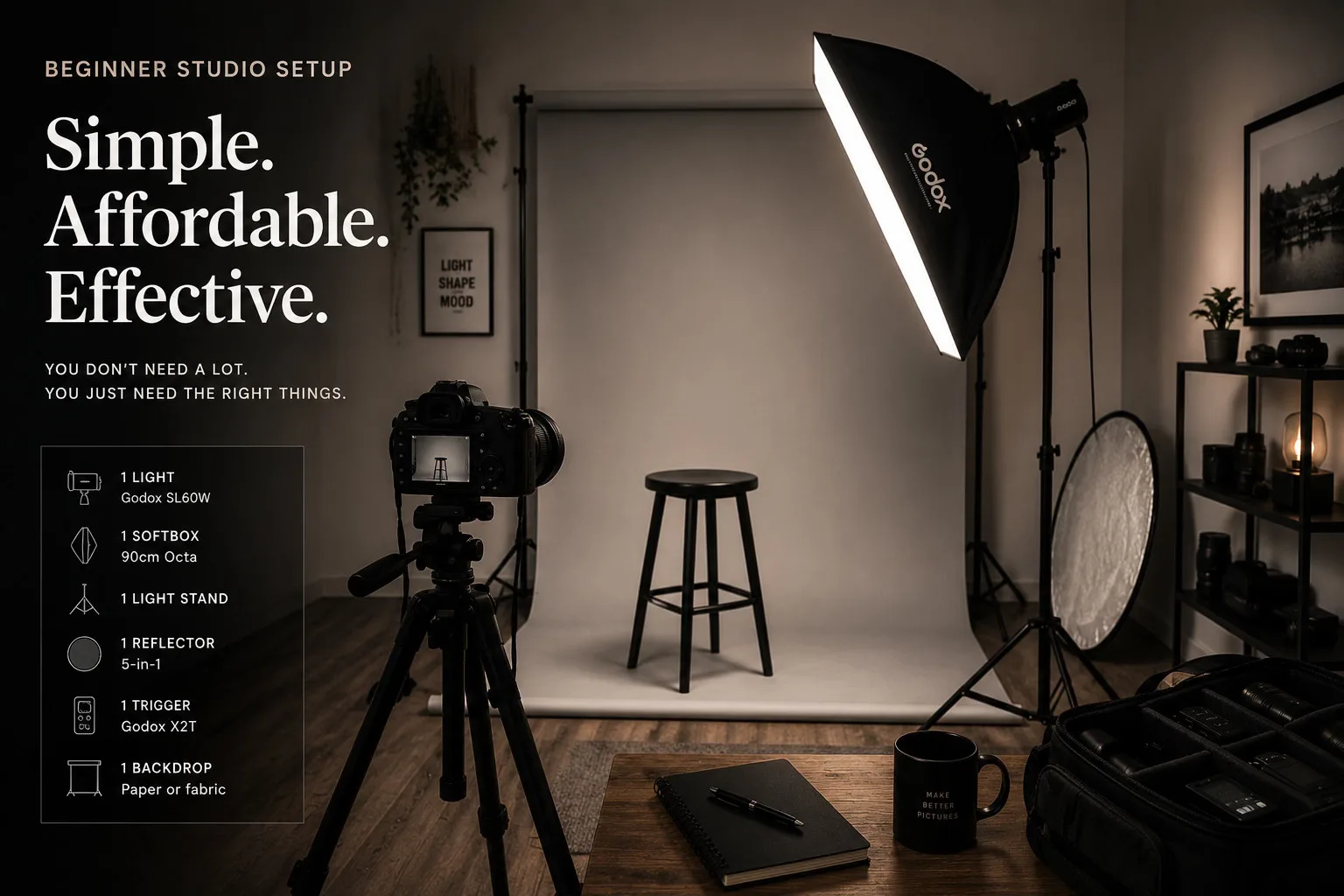
A functional beginner setup can actually be relatively simple.
For many people, something like this is already enough:
- one flash or continuous light
- one medium-to-large softbox
- one light stand
- one reflector
- a clean background
- a trigger (if using flash)
That alone can already create strong portraits.
Brands like Godox or Neewer became popular partly because they made beginner lighting setups far more accessible financially.
Source:
https://www.godox.com/
You do not need a giant studio to start learning studio photography properly.
What matters more is understanding:
- placement
- control
- consistency
The Hidden Problem With Cheap Gear
Cheap gear is not always bad.
But extremely cheap modifiers often create frustrating results:
- uneven light
- poor diffusion
- weak build quality
- unstable stands
- inconsistent color temperature
And beginners sometimes mistake bad gear limitations for lack of talent.
That can become discouraging very quickly.
This is especially true with lighting color consistency.
Mixed color temperatures are one of the most common beginner mistakes.
Source:
https://en.wikipedia.org/wiki/Color_temperature
A room with warm household lights mixed with cooler LEDs can make skin tones look strange without beginners fully understanding why.
Small Studios Often Teach Better Habits
Interestingly, starting small sometimes helps more.
A limited setup forces photographers to:
- move lights intentionally
- control shadows
- think about framing
- use space carefully
Large studios and multiple lights can actually become distracting early on.
Many photographers improve faster once they stop trying to recreate complicated YouTube setups and instead focus on understanding one light deeply.
Practice Matters More Than Another Week of Gear Research
This is where many beginners lose time.
They spend months researching equipment before actually shooting consistently.
But lighting only truly starts making sense once you work with real people in real situations.
Different skin tones.
Different face shapes.
Different personalities.
Different styling.
That experience teaches more than another week watching gear reviews online.
Platforms like FindAShoot can help make this process easier by connecting photographers with models and creatives nearby — especially when building a portfolio or practicing studio work consistently.
Because in the beginning, frequency often matters more than perfection.
The Inverse-Square Law Sounds Complicated — But Changes Everything
Many photographers hear technical concepts and immediately feel intimidated.
But some ideas become surprisingly simple once you see them in practice.
One of the most important examples is the inverse-square law.
Source:
https://en.wikipedia.org/wiki/Inverse-square_law
In photography terms, it basically explains how quickly light loses intensity with distance.
And understanding this changes almost everything:
- background darkness
- light falloff
- contrast
- subject separation
It’s one of those concepts that sounds technical — but visually changes your work immediately once understood.
What Beginners Usually Don’t Need Immediately
This is the part nobody likes hearing.
You probably do not need:
- four lights
- expensive RGB setups
- fog machines
- giant studios
- premium cinema cameras
- dozens of presets
Not at the beginning.
Most photographers improve faster by simplifying.
Too much gear often creates distraction instead of growth.
The Setup That Actually Matters
At some point, most photographers realize something slightly uncomfortable:
The setup itself was never the most important part.
The important part was learning:
- how to shape light
- how to create atmosphere
- how to direct people
- how to notice details
- how to make subjects feel comfortable
Gear supports those things.
It does not replace them.
Final Thoughts
A good beginner studio setup should feel practical, not overwhelming.
You do not need to recreate a commercial production immediately.
You only need enough equipment to start understanding light intentionally.
Because most photographers remember the first time they truly controlled light.
That is usually the moment photography starts feeling less random — and much more personal.
💬 Comments · 0 comments
Be the first to comment.