

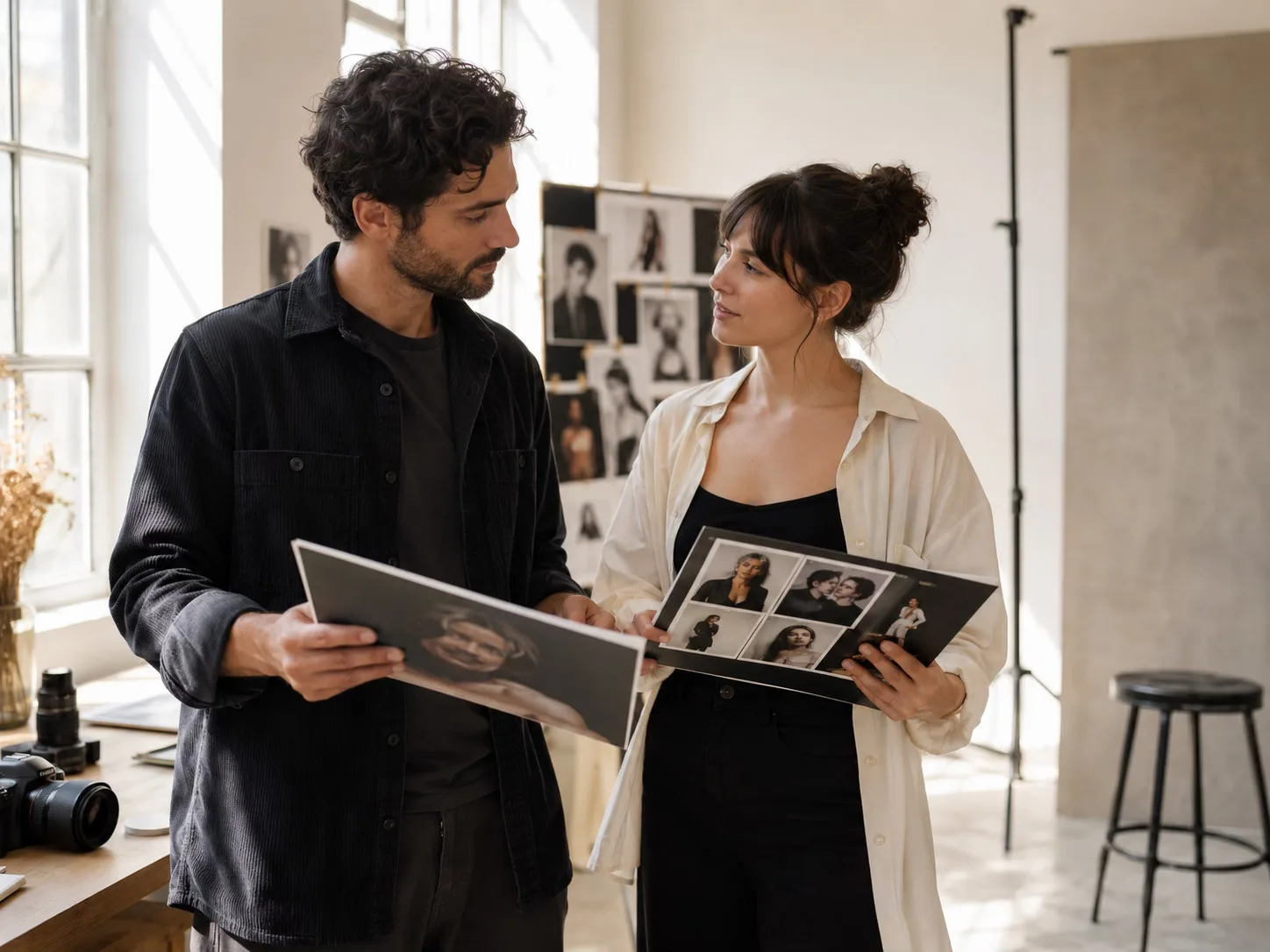
Casting or TFP? When Which Format Makes Sense
It's a familiar scene: In a Facebook group for photography, someone posts a casting for a paid editorial – and just a few hours later, a comment appears: "Why not TFP? That's fair for both sides." The discussion is old, the camps are entrenched. But the truth, as so often, lies in the details.
I remember a shoot a few years ago. A young aspiring model had applied for a casting I had posted – paid, but with a rather small budget. She sent me a friendly message asking if we could do TFP instead, since she was just starting out and wanted to build her portfolio. I agreed, and we met in a loft in Berlin. The result was solid, but not exceptional. She got images for her book, I got shots for my portfolio. But in hindsight, I asked myself: Wouldn't I have preferred to book someone with more experience who would have been worth the fee? And wouldn't she have perhaps benefited more from a casting where she learned how professional processes work?
The question "Casting or TFP?" is not a matter of faith, but a strategic decision. It depends on several factors: your goal, your experience, your budget, and the project itself.
What TFP Really Means
TFP stands for "Time for Prints" – or, more modernly, "Time for Portfolio." It's a barter: The photographer invests time and often location or equipment, the model invests their time and appearance. In the end, both receive the images for their own use. TFP is not volunteer work, but a trade. And like any trade, the value should be right for both sides.
I've done TFP shoots that are among my favorite projects. For example, with a makeup artist who wanted to realize an elaborate makeup concept. We met on a rainy Sunday in an old theater that I could rent for a day. She brought costumes, I brought lights and camera. Neither of us could have paid the fee that a professional team would have cost. But together, we created images that opened doors for both of us. She got a reference for her portfolio, I got a strong editorial.
TFP is ideal when:
- you want to realize a specific concept that is experimental or elaborate,
- both sides are still at the beginning of their careers and need portfolio material,
- the collaboration is on equal footing and clear agreements are made (usage rights, delivery deadlines, image selection).
But TFP also has downsides. It can lead to non-commitment when no money is involved. I've experienced a model canceling an hour before the shoot because "something personal came up." That wouldn't have happened with a paid job. TFP requires a high degree of commitment and mutual respect – and not everyone has that.
When a Casting Is the Better Choice
A casting usually means that the photographer or client pays a fee – whether to the model, the stylist, or the entire team. It's an employment relationship, with all rights and obligations. For many professional photographers, this is the norm: They work on behalf of magazines, agencies, or brands, and these pay.
I myself hesitated for a long time to post castings because I thought I had to be "good enough" first to pay. But that's a fallacy. Paying for a casting doesn't mean you're less talented. It means you value the work of others and that you expect a clear product. Paid shoots are usually more professional: preparation is more thorough, punctuality is a given, and results are often more consistent.
A casting makes sense when:
- you are working on a commercial project that must meet specific requirements (e.g., product photography, fashion catalog),
- you want to work with experienced models who know how to move in front of the camera,
- you have a fixed budget and want to stay predictable,
- you want to build long-term business relationships.
"Paid collaboration creates clarity: Both sides know what to expect and can fully focus on the shoot."
Of course, there are gray areas: Some photographers pay a small fee plus TFP for the remaining usage. Others offer "paid TFP," where the model receives a small expense allowance. Such models can be a good bridge.
The Decision on a Case-by-Case Basis
Ultimately, there is no right or wrong. I've done paid shoots that were uninspired, and TFP shoots that rank among my best work. The difference wasn't in the format, but in the attitude of those involved. What matters is that you are clear beforehand about what you need and what you can give.
Ask yourself: Is this project a passion project or a bread-and-butter job? Are you working with someone who invests as much as you? Can you afford the fee without financial strain? And above all: Do you respect the work of others?
If you're unsure, address it openly. Most creatives are willing to negotiate models. An honest conversation before the shoot is better than a misunderstanding afterward.
In the end, it's not about the label – casting or TFP – but about the question: Is what we're doing here fair for everyone? If you can answer that question with yes, you've made the right choice.
💬 Comments · 0 comments
Be the first to comment.